Cart
Your shopping cart is empty!
It's never too late to make things right :)



Contents:
In today’s industrial world, the boundary between operational technologies (OT) and information technologies (IT) is becoming increasingly blurred. A modern controller is no longer just a device for executing “if-then” logic. It is an intelligent node that must collect, process, protect, and transmit huge amounts of data to cloud services or local analytics systems.
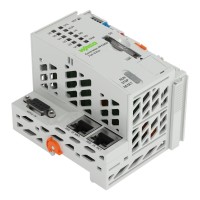
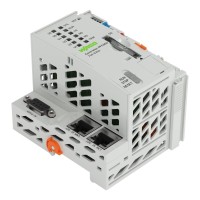
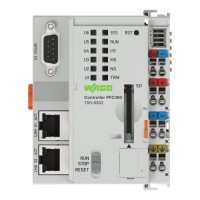
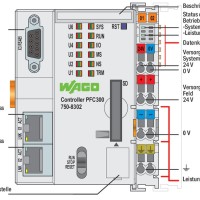
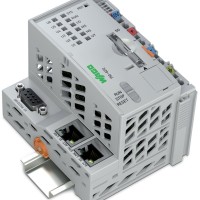
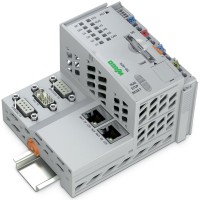
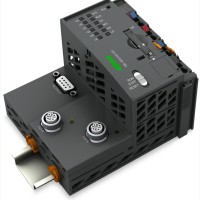
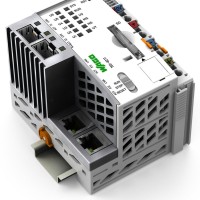
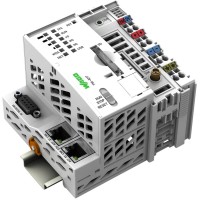
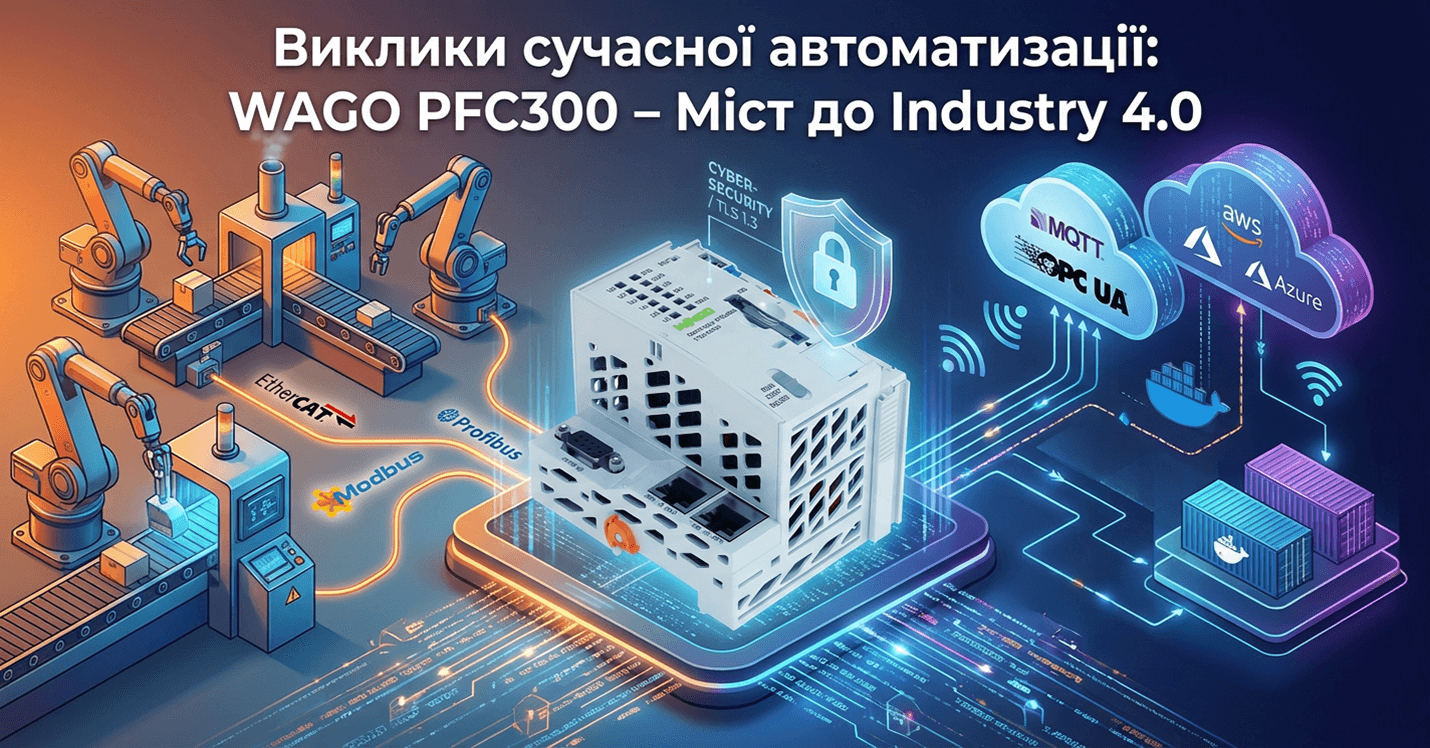
The WAGO PFC300 controller (Series 750-8302) is WAGO’s answer to market demands for higher performance, cybersecurity, and flexibility. It occupies the niche between classic PLCs and powerful industrial PCs, combining the compactness of the former with the computing power of the latter.
The heart of the PFC300 is a modern 64-bit processor, which represents a significant leap compared to previous series (such as the PFC100 or PFC200). The transition to a 64-bit architecture makes it possible to work more efficiently with large amounts of memory and complex mathematical calculations.
Main characteristics:

The WAGO PFC300 runs Real-Time Linux. Choosing an open OS with real-time patches (RT-Preempt) provides several critical advantages:
The primary engineering environment for the PFC300 is CODESYS V3. This modern environment supports all IEC 61131-3 languages:
Thanks to object-oriented programming (OOP) support in CODESYS V3, developers can create reusable libraries, significantly speeding up commissioning.
One of the main features of the PFC300 is full support for Docker technology. This makes it possible to run IT applications directly on the controller in isolated containers.
Some advantages of Docker technology:
The PFC300 is a true “polyglot” in the world of automation. It supports a wide range of protocols, making it an ideal gateway between the shop floor and the cloud.
|
Protocol type |
Supported standards |
|---|---|
|
Industrial buses |
Modbus TCP/UDP/RTU, EtherNet/IP, CANopen, Profibus, EtherCAT |
|
IT & Cloud |
MQTT, OPC UA (Server/Client), HTTP(S), DHCP, DNS, FTP(S) |
|
Energy |
IEC 60870, IEC 61850, DNP3 |
Thanks to the built-in MQTT client, the controller can send data directly to such clouds as Microsoft Azure, AWS, Google Cloud, or WAGO Cloud.

Since the PFC300 is connected to the internet, security is a top priority. WAGO has integrated a comprehensive security package:
These measures comply with international cybersecurity standards for industrial control systems (for example, IEC 62443).
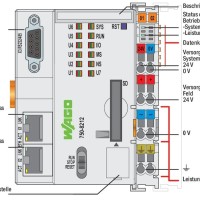
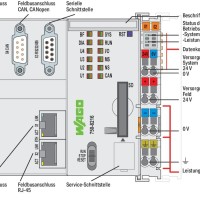
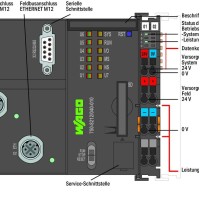
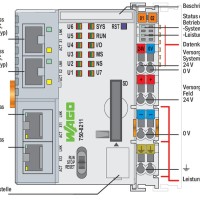
The PFC300 controller has a compact housing for mounting on a standard 35 mm DIN rail. Its design provides:
Technical specification
This table clearly shows why the PFC300 is called a “performance leap”.
|
Characteristic |
WAGO PFC200 (Series 750-821x) |
WAGO PFC300 (Series 750-830x) |
|---|---|---|
|
Processor architecture |
32-bit (Cortex A8) |
64-bit (Cortex A53) |
|
Number of cores |
1 |
2 or 4 (depending on model) |
|
RAM |
256 MB — 512 MB |
512 MB — 2 GB |
|
Internal flash memory |
256 MB — 4 GB |
Up to 12 GB |
|
Docker support |
Limited (only on special firmware) |
Full (native support) |
|
Cybersecurity |
Basic (TLS 1.1/1.2) |
Enhanced (TLS 1.3, TPM chip) |
|
Operating system |
RT-Linux (32-bit) |
RT-Linux (64-bit) |
The PFC300 controller is a universal “bridge” between field devices and the cloud.
|
Category |
Protocols and technologies |
Purpose |
|---|---|---|
|
Industrial networks |
Modbus TCP/UDP/RTU, EtherNet/IP, CANopen, Profibus, EtherCAT |
Communication with sensors, drives, and frequency converters. |
|
IIoT and Cloud |
MQTT, OPC UA, Sparkplug B, HTTP(S) |
Sending data to the cloud (AWS, Azure, WAGO Cloud). |
|
Cybersecurity |
VPN (OpenVPN, IPsec), Firewall, SSH, TLS 1.3 |
Protection from unauthorized access and encryption. |
|
IT services |
DHCP, DNS, FTP, SNMP, NTP |
Integration into the corporate IT network of the enterprise. |
|
Special |
IEC 60870, IEC 61850, DNP3 |
Use in the energy sector and telemetry. |
Importance for engineers: